

 Fulhadhoo, The Maldives
“The Maldives isn’t for me.” A flop and drop holiday on a beach, even in paradise, would leave me fidgety in no time. But surely there was more to the Maldives than sun loungers, swaying palm trees and turquoise horizons?
The best way to find out was to go. But not to the resorts on private islands. Rather to the ‘local islands’ where Maldivians live, to experience real life.
What I discovered was an archipelago with a forgotten ancient past, a turbulent and fascinating history, and a precarious future. A place where natural paradise is interwoven into everyday life; where local culture is deeply rooted and social fabric is tightly knit; and where experiences go way beyond lounging on a deck chair. This is the Maldives that Instagram forgot.
The Maldives is divided into two realities. The first, the private island resorts of public imagination – over-water villas, cocktails at sunset, honeymoon romance. The second? The local islands on which the half a million Maldivians reside, and where Islamic norms apply. There are 200 such islands, each with their own character. Some are lush and agricultural, others focus on tuna fishing. All are welcoming, mellow, and rich in natural beauty.
Tourism is still relatively new here. While private islands established hotels in the 1970s, local islands only opened up to foreign visitors in 2010. This has slowly revolutionised travel to The Maldives. Not only is the archipelago accessible to those on more modest budgets; it has allowed visitors to experience the Maldives as they really are, while contributing to the local economy.
I potter through criss-crossing lanes of low, pastel-coloured coral stone houses, watching ladies in wafting robes sweeping the streets. At the harbour, a traditional dhoni boat docks, the giant rudder expertly manoeuvred by the captain’s foot. The fishermen, curly locks bleached auburn by the sun, gut their catch, tossing discarded innards to the reef sharks that gather in the reddening water. “You want tuna?” they call to me, holding up their prize. “Very good, very tasty!”. It’s the only time I yearn, just a little, to be self-catering.
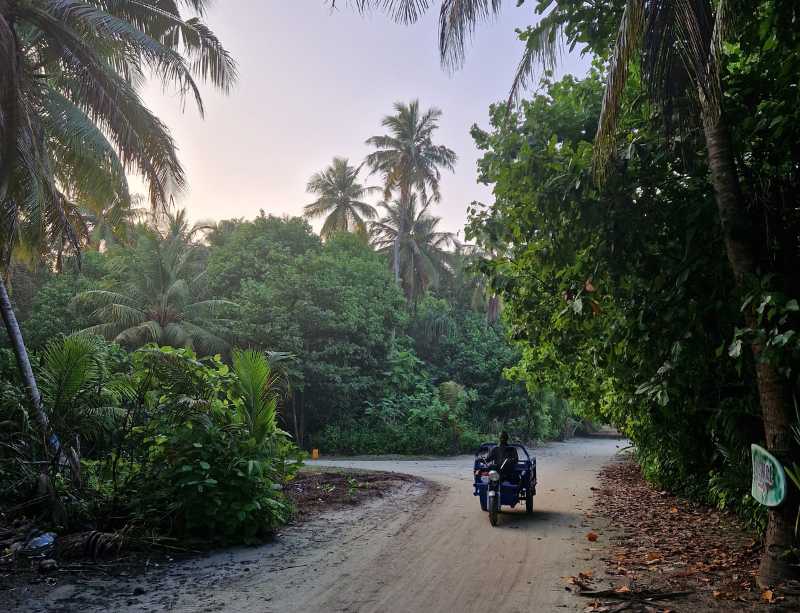
Villages come to life in the late afternoon, with boys racing on bicycles across dusty tracks, groups of girls walking along lanes strewn with purple bougainvillea, families out for a gentle moped ride with the littlest ably balanced on their parents’ laps. Playgrounds, outdoor gyms and floodlit football pitches start to fill. The ladies’ football team are training for their inter-island match tomorrow. The softly mesmerizing sound of the call to prayer drifts across the warm evening air.
Life is simple, but there is no poverty. “We have large families, we have communities, we care for each other”, a says Ubai, my inimitably cool, unflappably efficient and endlessly knowledgeable guide.
There is no question my guide, Ubai, cannot answer. His intuition has in fact predated international discoveries… National Geographic’s finding that Maldivian sand owes its icing sugar texture to being 80% parrot fish poo was something Ubai had worked for himself out years before, freediving as a child.
One of the hardest questions is, where to eat locally? Beyond delicious ‘hedika’ snacks – a pick ‘n’ mix of tuna and coconut morsels – Maldivian eateries only serve foreign cuisines. To sample proper Maldivian food, you need to be invited into a family home. Ubai gets on the phone. Minutes later, we brush past bougainvillea into a shaded yard and are warmly greeted by mother and daughter, Mary and Rayya.
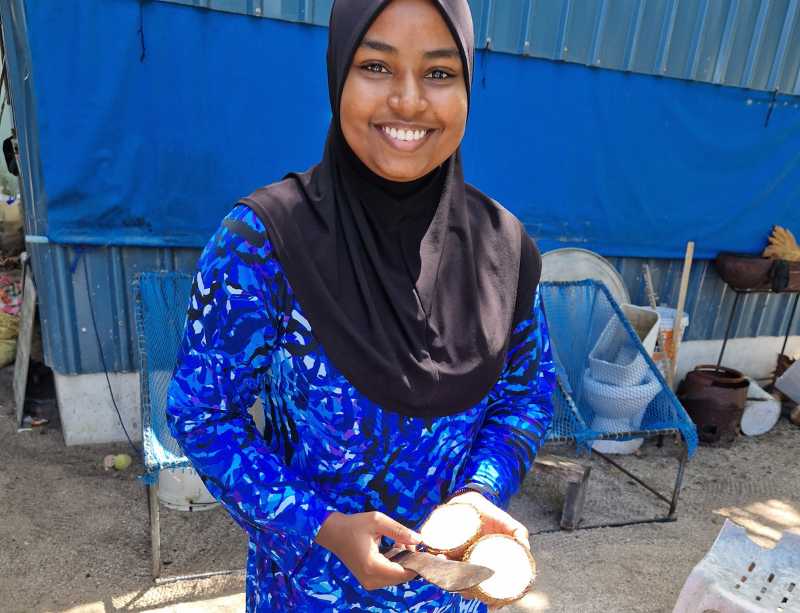
Lunch preparation is in full swing – water is on the boil for ‘garudhiya’ tuna soup, the fish paste is ready, the tuna has been smoked over a coconut husk fire. Rayya’s father breaks open a coconut with a foot operated cleaver (it’s a lot harder than it looks). Machete in hand, Rayya cleaves the coconut with an expertly precise blow. I squat inelegantly on a low stool with a serrated blade attached and grate the white flesh for the ‘masfen’ dish. Rayya takes over, her strong strokes vastly outpacing my inexpert gestures. With a whizz, Mary blends the shavings to cream, and compiles the chillis, tunas, squeezed onions and chillis into a feast of dishes. The result is fresh, zingy, satisfying and absolutely delicious.
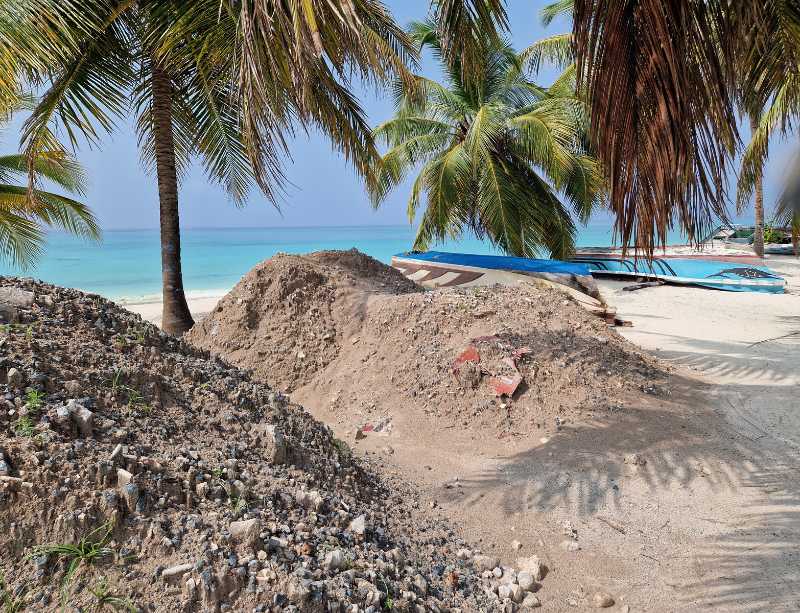
The mellow rhythm of local life contrasts with the demands for development. The government has set a goal of reaching 7.5 million visitors to the Maldives annually; over three times the current level. While official targets are often more for show, and plans to reach them are less than concrete, the growth in infrastructure is visible. Next to picture perfect white sand beaches lie mounds of rubble; beside centuries-old coral houses, steel poles rise expectantly from the ground; piled in the shade of blooming magenta foliage are bags of sand ready for the mixer.
Most tourist destinations are scattered on islands around Male, the capital, and the archipelago’s only international airport. Plans are underfoot to change this. Visitors on domestic arrivals at to northern local island Hanimaadhoo are greeted by a building site: the airport is expanding to attract international flights. “For international airlines to send planes here, they need higher capacity for tourists: 6,000 more beds, on this small island alone. We currently have around 100,” bemoans a local hotel manager.
The growth is by no means only on local islands. New, private islands are artificially created to accommodate tourists: once thriving reefs are filled in with dredged sand to provide their foundation. Harbours are constructed which redirect currents, eroding existing beaches and disturbing marine migration. An ex-pat colleague confides in me that, “The government thinks more beds means more visitors. They don’t realise that building for more beds drives visitors away.”
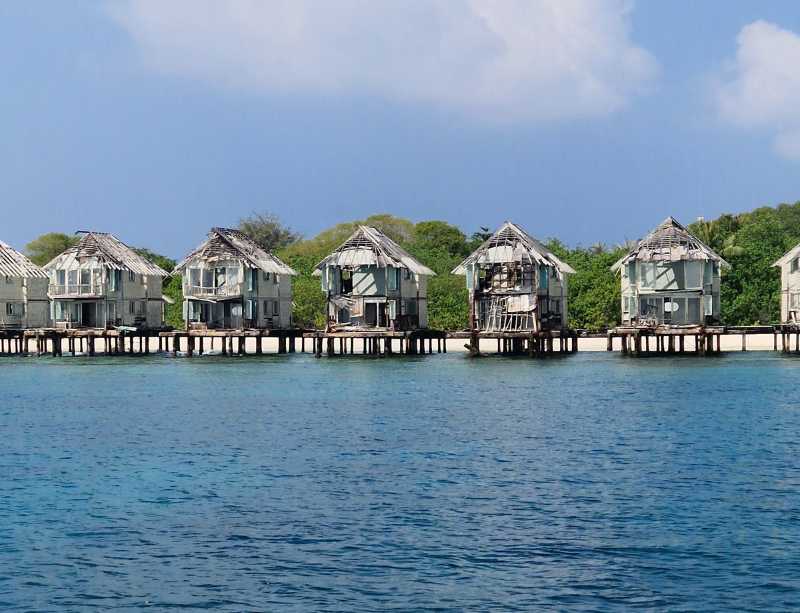
However, not all plans are destined for success. The comfortable and well-appointed Barefoot hotel on Hanimaadhoo runs a snorkelling outing to ‘Abandoned Beauty’ – a ‘ghost town’ hotel on a nearby island, its once sumptuous overwater stilted villas left by its unsuccessful owners to decay. Government projects don’t always prove fruitful either – ambitious plans for a bridge to connect Male to its neighbouring island, Vilimale, ran out of funds – and government manifestos – half way through completion.
Nevertheless, the drive to build is undeniable. Alongside the projected 2050 submersion of the islands due to global warming, this moves The Maldives even higher up the ‘Last Chance’ destination list.
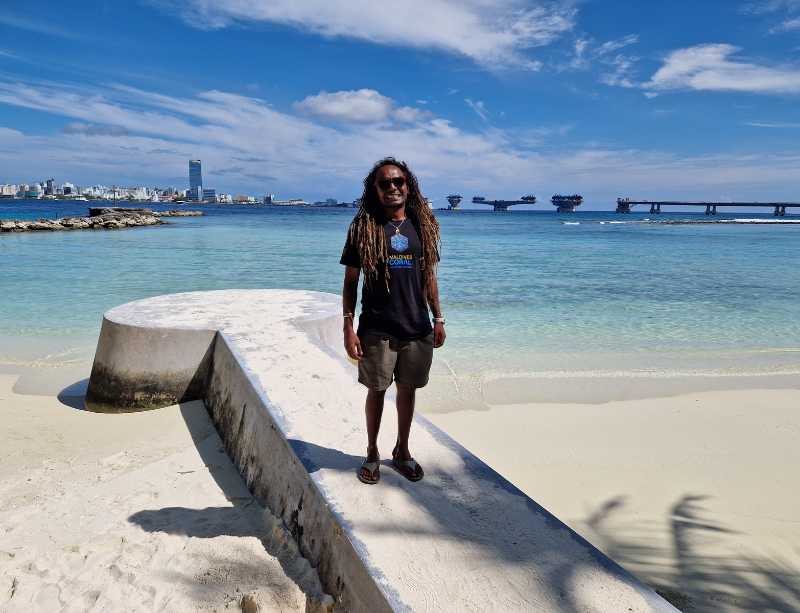
There are beacons of hope. I meet one. With an easy smile, sun-bleached dreadlocks and unwavering positivity, Beybe humbly recounts how, as a 12-year-old surfer, he ended up saving three of the beaches on Vilimale island from the diggers. “I took my surfboard and stood in front of them. I said if they wanted to dump sand there, they’d have to dump it on me first”. His efforts developed into an NGO – Save The Beaches Maldives – funded largely by Mars Sheba (yes, the cat food). He now works to protect reefs from development using silt shields; instigates regular beach cleans (gathering 3 tons on his first day…); and has invented a way to transplant coral onto artificial reefs.
On the idyllic island of Fulhadhoo, I visit one such artificial reef. The coral samples Beybe attached to his interlocking hexagonal ‘star’ structures three years prior have flourished, filling a gap in the existing reef. Shoals of fish dart around them, a shy box fish takes cover under one, and an elusive nudibranch makes its home in another. Regeneration can work, when it’s given a chance.
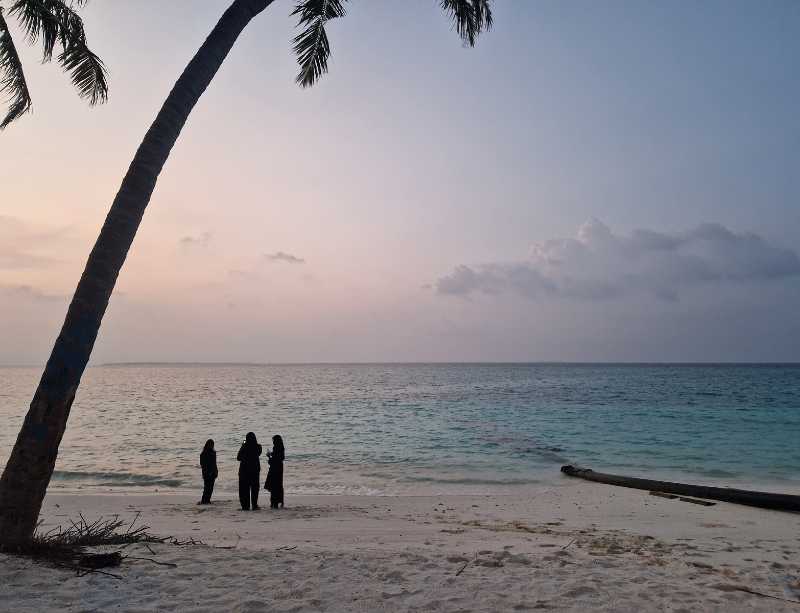
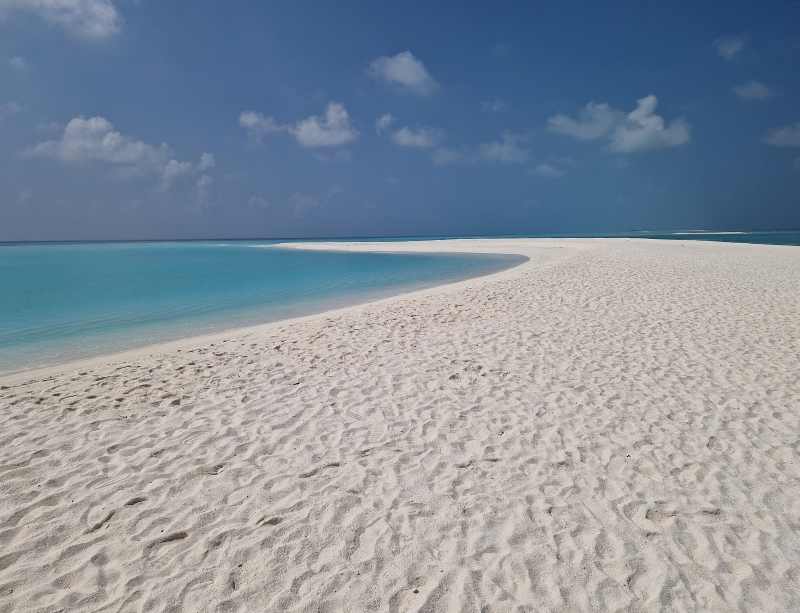
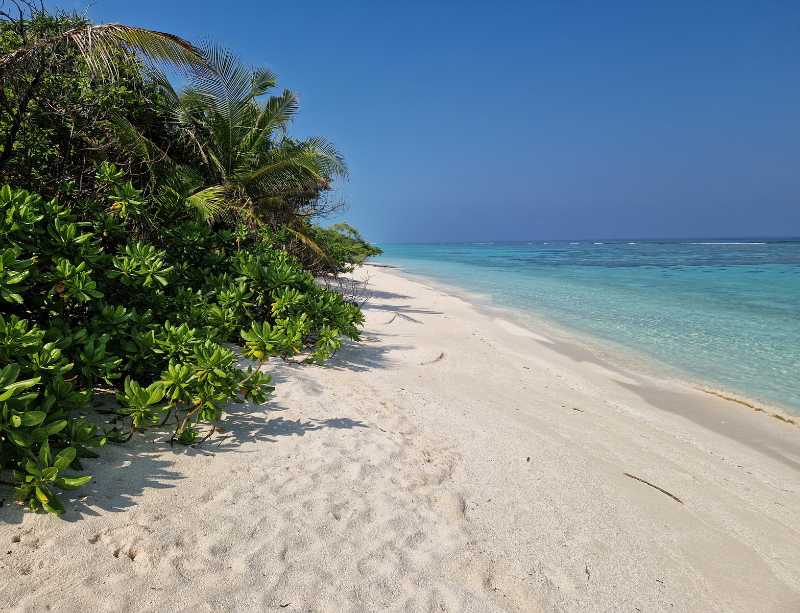
Just up from the reef, passing through the undergrowth, I step onto the most beautiful beach I have ever seen. A strip of pure white, powder fine sand curls into the distance, lapped by clear turquoise waters, and fringed by green mangroves. I see barely another human. The sun casts a pink glow on the world as it dips behind the languid misty clouds of the horizon. This is Fulhadhoo – the picture postcard image of the Maldives, yet far from any budget-challenging private island resort.
Just up from the reef, passing through the undergrowth, I step onto the most beautiful beach I have ever seen. A strip of pure white, powder fine sand curls into the distance, lapped by clear turquoise waters, and fringed by green mangroves. I see barely another human. The sun casts a pink glow on the world as it dips behind the languid misty clouds of the horizon. This is Fulhadhoo – the picture postcard image of the Maldives, yet far from any budget-challenging private island resort.
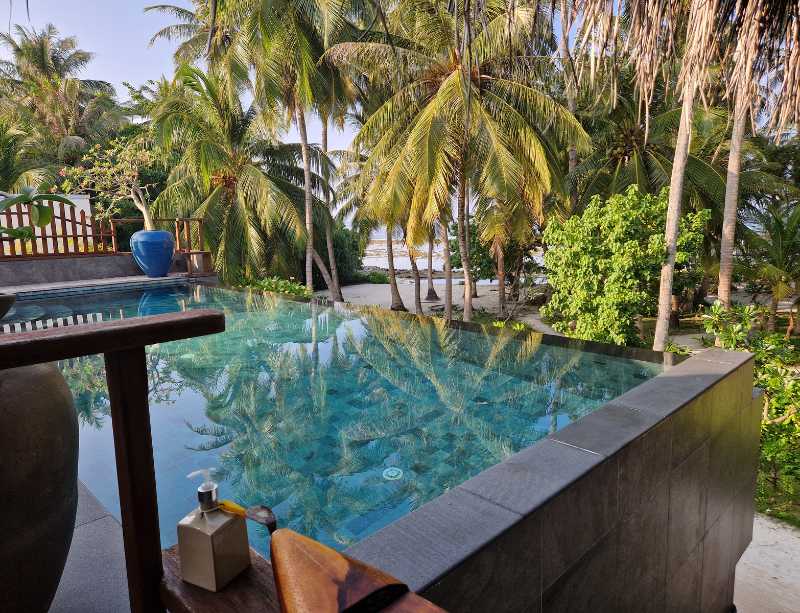
Despite these challenges, local island stays have begun to provide a level of comfort that a discerning traveller would expect. While the luxuriousness of the private resorts is as yet unparalleled on local islands, a small number of hotels stand head and shoulders above the budget standard, with excellent service, appealing interior décor and honourable ecological credentials. Our favourite was Island Luxury Boutique on Fulhadhoo – a charming 8-room hotel with an elevated infinity pool set among treetops, between which furry fruit bats flap. Its sister property, Island Luxury Retreat, which has recently opened on nearby Maalhos, promises a further step up in exclusivity.
The Barefoot, on the northern island of Hanimaadhoo, is a slightly larger although very good mid-range option, with an exceptionally beautiful beachfront, and a jetty from which to watch reef sharks gliding past in the evening.
The beauty and diversity of the marine life is astonishing, irrespective of where you stay. Our divemaster Martyn, as gentle and streamlined as a dolphin, takes us to underwater forests of enormous mushroom-shaped coral; to neon-walled caves of giant bat fish and passing eagle rays; and to cleaning stations of wide winged manta rays, in perfect symbiosis with flitting yellow cleaner fish.
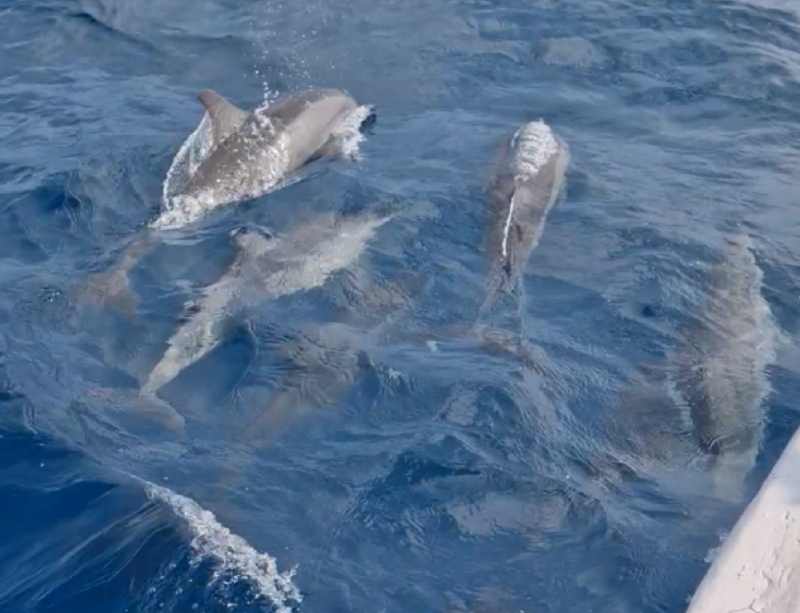
As our boat speeds between dive and snorkelling sites, we are joined by over a hundred spinner dolphins, leaping into the air in synchronized spirals and riding the bow waves in joyful play. At our snorkel site we spot them again, a pod of 16 approaching us, complete with a calf. They seem to slow down, and with all the strength in my legs I reach them. I swim alongside them as they dive and surface, for a minute or an eternity, immersed in the intense beauty of this moment.
Luxury in the Maldives goes beyond the resorts. Seeing beyond the luxury and gaining an understanding of the local culture, its history and its challenges, brings greater depth and satisfaction. When approached with a mindset of understanding and openness, staying on a local island on the Maldives offers paradise… and a peek behind it.
Get in touch with us at LiNGER to talk about how you can experience The Maldives differently. We’ll design an itinerary that feels entirely yours – thoughtful, seamless, and full of discoveries you won’t find in the more obvious places.
For more on The Maldives, see our blog:
 Back
Back
Sign up to our occasional newsletter, packed with insider tips, destination ideas, and off-the-beaten-track experiences
Sign Me Up
Telephone: +44 (0) 20 7039 9240
E-mail: travel@linger.co.uk
167-169 Great Portland Street, 5th Floor, London, W1W 5PF




 Filter Blogs

 Sample Itinerary
 Testimonials
 Gallery